Information, inspiration and ideas to help teachers in and out of the classroom
Friday, May 31, 2013
New Resources for Teaching Kids Financial Literacy
Tags:
five for friday
OSU gives students a lesson on debt [The Columbus Dispatch via The Quick and the Ed] - No reason you can't do this in some form for K-12.
Free Credit Lesson Plans for Middle School and High School Teachers - Financial education is both a necessity and a no-brainer as far as making math more relevant for our kids.
Elementary Math, Reading Skills At Age 7 Linked To Financial Success At Midlife, According To Study [HuffPo] - Perhaps the best financial literacy we can teach is indirect: making sure our children can read and write fluently in elementary school.
Use This "Bank Ledger" to Manage Your Kids' Allowance [Lifehacker] - This one is meant to be used at home, but I think it could be adapted to an early elementary classroom using play money or something of the sort.
7 Places Teens (and Adults) Can Learn About Money [Wise Bread]
Friday, May 24, 2013
New Resources for Teaching Math: May 2013
Tags:
five for friday
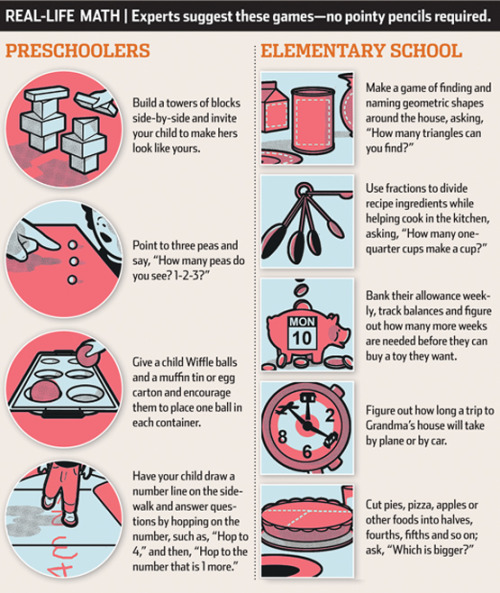
How math-phobic parents can teach kids to love math [Explore]
Math Worksheets Land - Tons of Printable Math Worksheets From All Grade Levels - A new, free resource created by a retired math teacher.
Balancing the Equation for Boys and Girls in Math [The Educated Reporter] - Research to apply to your classroom practice.
13 ways to make your kid a math genius [Holy Kaw!] - This echoes a lot of things I wrote about in Toys & Games Every Kid Should Play With Growing Up.
Math Games and Videos for the Common Core [PBS LearningMedia] - The free service recently added tons of new educational content, including this outlet.
Friday, May 17, 2013
Weekend Reader on Using Music in the Classroom
How Music Can Become A Bigger Part Of Your Classroom [Edudemic via Twitter]
Spitting Rhymes and Firing Synapses: Freestyle Rap Battles Could Boost Student Creativity [GOOD]
Swapping C.R.E.A.M. for STEM: Wu-Tang's GZA Helps Kids Learn Science With Hip Hop [GOOD]
Jake Scott on YouTube [via The Educated Reporter] - This high school math teacher has been combining rapping with instruction.
VIDEO: Why Music Moves Us [Explore] - A little more on the science behind the power of music.
Using music in the classroom also happens to be one of the lessons in my book Teaching is Not a Four Letter Word. You might like it.
Finally, here's the now infamous Domain & Range Song that I adapted a few years ago:
Spitting Rhymes and Firing Synapses: Freestyle Rap Battles Could Boost Student Creativity [GOOD]
Swapping C.R.E.A.M. for STEM: Wu-Tang's GZA Helps Kids Learn Science With Hip Hop [GOOD]
Jake Scott on YouTube [via The Educated Reporter] - This high school math teacher has been combining rapping with instruction.
VIDEO: Why Music Moves Us [Explore] - A little more on the science behind the power of music.
Using music in the classroom also happens to be one of the lessons in my book Teaching is Not a Four Letter Word. You might like it.
Finally, here's the now infamous Domain & Range Song that I adapted a few years ago:
Friday, May 10, 2013
Weekend Reader on School Lunches & Student Health
Tags:
education issues,
five for friday
How a $50 School Lunchroom Makeover Could Help Fight Childhood Obesity [Parade.com]
How the Food Industry Exploits Students’ Cravings for Sugar, Salt, and Fat [Edvoices] - Mr. Nast makes great points about the need to teach our kids media literacy, especially the power of advertising, as well as the science behind junk food.
What NOT to do: Lunch Ladies Teach Middle Schoolers About Debt, Trash Their Lunches If They Owe Money [Consumerist]
Action for Healthy Kids - This advocacy group has a lot of information on model school lunch and health programs.
USDA Rolls Out New School Brunch Program For Wealthier School Districts [The Onion] - A little satire that makes real life calls for better lunches for everyone seem much more reasonable.
Friday, April 19, 2013
New Online Resources for Math Teachers
JsTIfied is a Pixel-Perfect Graphing Calculator Emulator [Lifehacker] - I'm not sure if this is the best solution in terms of bringing obsolete technology into the smartphone age, but it's progress.
The Best Way to Teach Kids About Money? Slip It Into Math and English Classes [TIME.com] - This seems common sense to me, but it's only now becoming a national priority. Here's an example I came up with not too long ago: Math in the Real World: Should I Take This Loan Offer?.
IXL Math - A new website with math practice for nearly all K-12 grade levels and subjects. Your students can create accounts, track progress and get feedback and help on specific skill sets.
Murals and Math: One School's Solution to Graffiti [GOOD] - This could be done online or offline. Beautiful, smart and engaging.
Curriki Announces New Online Project-BASED Geometry Course Available Free to Teachers & Students [Curriki]
Friday, April 12, 2013
A Brief Collection of Critical Topics Missing From Most Curricula, Part 2
Entrepreneurship: Rise of the Mini-Preneurs: A Kid-Run Virtual Lemonade Stand To Teach Entrepreneurship [GOOD]
Independence: Hacking the Classroom to Encourage Student Independence [THE Journal]
Financial literacy: Moneythink: Giving a Handup (Not a Handout) With Financial Literacy Skills [GOOD]
Basic electronics: How to Get Started with DIY Electronics Projects [Lifehacker]
Coding: A Videogame That Teaches Kids To Code [Fast Company Co:Design] - See the game's trailer below.
See the original post, A Brief Collection of Critical Topics Missing From Most Curricula.
Independence: Hacking the Classroom to Encourage Student Independence [THE Journal]
Financial literacy: Moneythink: Giving a Handup (Not a Handout) With Financial Literacy Skills [GOOD]
Basic electronics: How to Get Started with DIY Electronics Projects [Lifehacker]
Coding: A Videogame That Teaches Kids To Code [Fast Company Co:Design] - See the game's trailer below.
See the original post, A Brief Collection of Critical Topics Missing From Most Curricula.
Friday, April 5, 2013
Weekend Reader on Gaming in the Classroom: April 2013
Ten Surprising Truths about Video Games and Learning [KQED MindShift]
Bringing Gaming to the Classroom [Cisco]
Free Tools to Incorporate Game-Based Learning [Edutopia]
Can Video Games Make Us Better People? [Annie Murphy Paul via Twitter]
Math, Physic, Languages: Minecraft is the Teachers’ Ultimate Multi-Tool [KQED MindShift]
Bringing Gaming to the Classroom [Cisco]
Free Tools to Incorporate Game-Based Learning [Edutopia]
Can Video Games Make Us Better People? [Annie Murphy Paul via Twitter]
Math, Physic, Languages: Minecraft is the Teachers’ Ultimate Multi-Tool [KQED MindShift]
Friday, March 22, 2013
5 Awesome Articles to Share With Your Students
![]() |
| How I used to share awesome articles with my students. |
MIT’s Free Creative Learning Class Teaches You How to Learn Almost Anything [Lifehacker] - Discuss question: What would you want to learn, if you could do it for free?
What if students designed their own schools? [GOOD] - Ask your students what their school might look like. You can use the short video as the kickoff for your discussion.
Mark Hyman, MD: Why Cooking Can Save Your Life [Huffington Post] - Home Economics isn't too easy to find these days, but that doesn't mean the skills are unneeded for your student's long term health.
How to Self-Publish Your Very Own Children's Book [Wired:GeekDad] - In the digital age, anyone can do this. I would suggest to use Lulu.com for the self-publishing, since they have done right by me with my two books, but otherwise, there's nothing stopping your students from being able to do this. You could do this as a very low tech in class project, but if you have access to tablets or similar tech, why not create the physical product? Your students would be much more invested if they were creating something not only tangible but that could actually make them some money.
Monday, March 18, 2013
What Will It Take For "Zero Tolerance" Policies To End?
It's not too surprising that as a nation, we're all out of outrage for stories like Boy Suspended From School For Making “Gun” Out Of A Pop-Tart and Florida high school hero gets suspended AFTER preventing school bus shooting. It seems that in recent years, stories like this have become as much of a media cliche as "local boy makes good." They still illicit some sort of reaction, but it's not sustained or strong enough for us to make a serious change to the now standard "zero tolerance" policies in school districts across the country.
"Zero tolerance" sounds great when the most common school story seems to be about mass shootings. Of course, that's why we have these policies to begin with. The reality is that "zero tolerance" runs counter to anti-bullying efforts as well as common sense that every good teacher uses within their classroom.
Bullying is nothing new. I was bullied in middle school (this was years before Columbine), and when I stood up for myself and it inevitably led to a "fight", we were both punished equally. This was wrong then, and it's wrong now--if a student is bullied and stands up for themselves, or someone defends themselves after someone else starts a fight, it should not result in both students being suspended or otherwise punished. Obviously, a student intervening to prevent a Columbine-like tragedy should be honored, not punished.
In short, "zero tolerance" discourages anyone from intervening and preventing bullying or other violence--including bystanders--because the consequences are doled out so thoughtlessly.
This brings us to the second problem: great teachers follow the main theme of Teaching with Love & Logic, the best book ever written about teaching. Great teachers know that the ladder of consequences or any other rigid system simply doesn't work. Every incident should be considered on a case-by-case basis, like it is in exemplary classrooms. This idea hasn't spread to the school or district level, like many common sense ideas that come from the classroom, but that's because it's easier to follow mindless, blanket policies.
The solution to this problem is very simple: districts and ultimately principals consider each case on it's merits and hand out appropriate consequences accordingly. This would end the practice that led to the Florida teen and any kid that makes a mere gesture of a gun getting suspended. Keeping "zero tolerance" in place not only fails to protect innocent kids, but also adds to the list of reasons why students are so increasingly disengaged with the entire school system.
Our students deserve a system grounded in reality, like the rest of the world around them.
![]() |
| An artifact from my earliest teaching experience |
Bullying is nothing new. I was bullied in middle school (this was years before Columbine), and when I stood up for myself and it inevitably led to a "fight", we were both punished equally. This was wrong then, and it's wrong now--if a student is bullied and stands up for themselves, or someone defends themselves after someone else starts a fight, it should not result in both students being suspended or otherwise punished. Obviously, a student intervening to prevent a Columbine-like tragedy should be honored, not punished.
In short, "zero tolerance" discourages anyone from intervening and preventing bullying or other violence--including bystanders--because the consequences are doled out so thoughtlessly.
This brings us to the second problem: great teachers follow the main theme of Teaching with Love & Logic, the best book ever written about teaching. Great teachers know that the ladder of consequences or any other rigid system simply doesn't work. Every incident should be considered on a case-by-case basis, like it is in exemplary classrooms. This idea hasn't spread to the school or district level, like many common sense ideas that come from the classroom, but that's because it's easier to follow mindless, blanket policies.
The solution to this problem is very simple: districts and ultimately principals consider each case on it's merits and hand out appropriate consequences accordingly. This would end the practice that led to the Florida teen and any kid that makes a mere gesture of a gun getting suspended. Keeping "zero tolerance" in place not only fails to protect innocent kids, but also adds to the list of reasons why students are so increasingly disengaged with the entire school system.
Our students deserve a system grounded in reality, like the rest of the world around them.
Wednesday, March 13, 2013
Have You Read One Of My Books? If So, I Need Your Help
I know a lot of people have read one or both my books on teaching, Ten Cheap Lessons and Teaching is Not a Four Letter Word: How to Stop Worrying and Love the Job. Between the number sold and those I've given away, there's roughly a thousand of you out there. Here's my problem:
0 reviews for Ten Cheap Lessons on Amazon, only 1 on Lulu.com.
2 reviews for Teaching is Not a Four Letter Word on Amazon and 0 on Lulu.com.
I don't know about you, but I rarely buy anything online that has few or no reviews. So no matter where you got your copy of my books, you can help me out by logging in to either site and posting a brief review.
Positive or negative, I'd like you to share your thoughts with others who might be interested. Any feedback I receive will help me reflect, improve and hopefully be able to publish better work in the future.
Ten Cheap Lessons: Lulu.com, Amazon.com.
Teaching is Not a Four Letter Word: Lulu.com, Amazon.com
0 reviews for Ten Cheap Lessons on Amazon, only 1 on Lulu.com.
2 reviews for Teaching is Not a Four Letter Word on Amazon and 0 on Lulu.com.
I don't know about you, but I rarely buy anything online that has few or no reviews. So no matter where you got your copy of my books, you can help me out by logging in to either site and posting a brief review.
Positive or negative, I'd like you to share your thoughts with others who might be interested. Any feedback I receive will help me reflect, improve and hopefully be able to publish better work in the future.
Ten Cheap Lessons: Lulu.com, Amazon.com.
Teaching is Not a Four Letter Word: Lulu.com, Amazon.com
Monday, March 11, 2013
What Leaders Can Learn From Spike TV's Bar Rescue
Tags:
education issues
Jon Taffer would make a pretty good principal. In the Spike TV reality series Bar Rescue, the bar expert takes failing bars and turns them around. How that might qualify him for a principal role requires looking closely at this great show and finding the very practical lessons that apply to any successful organization.
The problems facing each bar vary, of course, but the overarching problem in nearly all of the businesses is a failure of leadership. At first, the owner usually refuses to take responsibility for bad practices, poorly trained managers and employees, or failing to meet the needs and wants of their clientele. Of course, when no one takes responsibility, nothing ever gets better--especially if the lack of accountability starts at the top.
Does that sound much different than a school or classroom that's being run poorly? You can only fix problems when you agree to own them.
The show follows a procedure of collecting information, history and observations and then using that data to make improvements. Taffer brings in experts to retrain staff, fix menus and improve the entire concept behind the bar. He uses tons of research and science to get the owner and staff on board with changes and to show us, the viewer, why it works.
The process of reflecting on relevant data is something every successful teacher and school leader does. Poor leaders can sometimes put on a good enough show to convince you they're seriously, objectively looking at what's right and wrong in their schools.
There's also some great examples of what not to do on the show. Owners, managers and employees display the whole gamut of poor decisions, from laziness to ignorance. Taffer himself does a lot of yelling and insulting that should never fly in any school or classroom.
Most importantly, there is always resistance to change--it doesn't matter that these places are failing and what they are doing is clearly not working, there's always someone fighting Taffer on making improvements.
We see all of these things in schools, and we must continually strive to do better.
There are many other shows like this on television, and they follow the same formula--Restaurant Impossible, Tattoo Rescue, and many other makeover shows. If you watch a lot of them, like me, you see these same lessons come up almost without fail. That's how you know it's something you can learn from as an educator.
Friday, March 8, 2013
Weekend Reader on Video in the Classroom: March 2013
19 Videos That Make Learning Fun [Mental Floss] - Covering everything from women's suffrage to calculus.
Kids Will Create Masterpieces With the Tabletop Moviemaking Studio [Wired:GeekDad]
THNKR - CHANGE YOUR MIND [YouTube via Twitter] - Described as TED talks for high school and college students "but better".
Making Math Meaningful with Online Games and Videos [KQED/Mindshift]
8 Videos That Prove Math Is Awesome [Mashable!]
Kids Will Create Masterpieces With the Tabletop Moviemaking Studio [Wired:GeekDad]
THNKR - CHANGE YOUR MIND [YouTube via Twitter] - Described as TED talks for high school and college students "but better".
Making Math Meaningful with Online Games and Videos [KQED/Mindshift]
8 Videos That Prove Math Is Awesome [Mashable!]
Subscribe to:
Comments (Atom)